
Deterministic trading systems for complex market regimes.
Steppe Quant Labs operates a proprietary stack designed to bridge the gap between theoretical research and high-fidelity execution. We prioritize low-latency stability and risk-aware logic over speculative scaling.
The Core Stack
Our internal laboratory environment focuses on three distinct layers of automated trading. Each layer is isolated to ensure that a failure in one component does not propagate through the system.
Low Latency Infrastructure
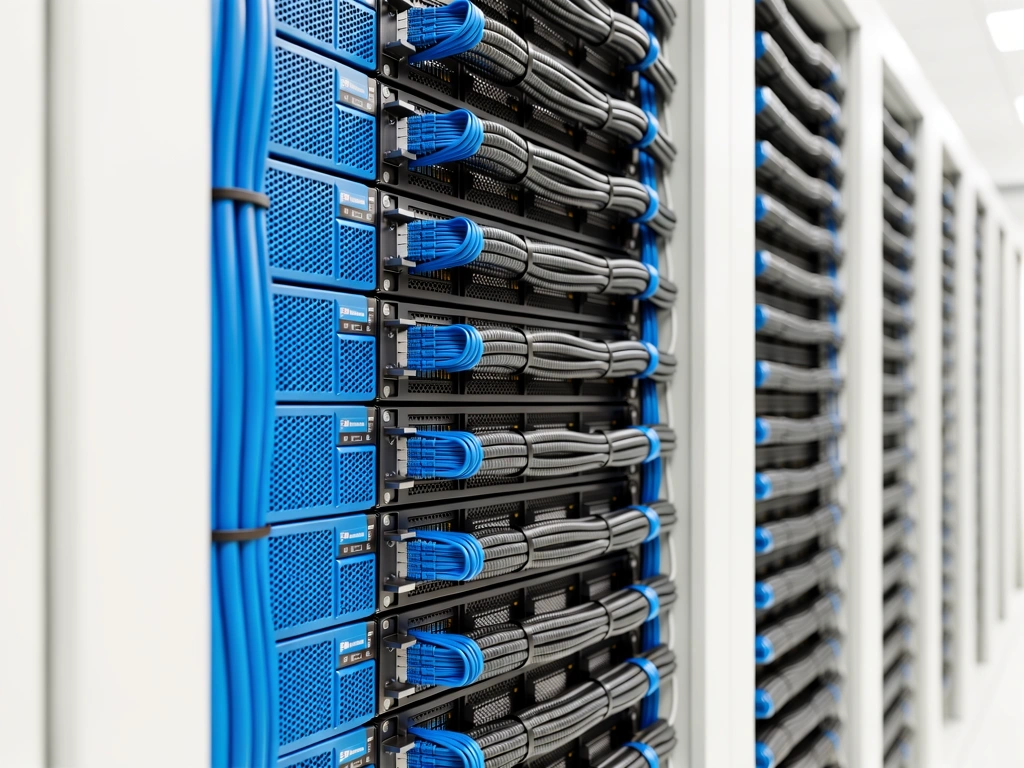
Utilizing optimized kernels and custom network protocols, we minimize the path from signal to order. Our infrastructure is co-located near primary exchange hubs to ensure the most consistent execution window possible.
- Kernel bypass networking
- Zero-copy memory management
Adaptive Risk Controls
Trading systems are only as resilient as their safety nets. We integrate real-time drawdown monitoring and volatility-adjusted position sizing directly into the execution thread.
- Automated kill-switch protocols
- Dynamic slippage modeling
Operational Classification
A technical breakdown of the algorithmic categories developed within our quant labs.

Market-Neutral Arbitrage
Designed to exploit micro-inefficiencies across correlated assets. This system focuses on relative value rather than absolute market direction, aiming for consistent alpha even during high-volatility periods.
High-Frequency Provision
Built for liquidity provision in deep markets. Our HFT framework emphasizes low cancellation-to-fill ratios and ultra-tight spread management using custom FPGA acceleration logic.

Trend-Following Heuristics
Utilizing medium-to-long term signals, these systems filter out noise to capture sustained directional shifts. They incorporate complex Bayesian updates to adjust weightings as new data arrives.
Why Engineering over Speculation?
In the world of automated trading, the most common failure point is not the model itself, but the bridge between the research environment and the live market. At Steppe Quant Labs, we spend 80% of our development cycle on edge-case handling and connectivity resilience.
Backtest Realism
Every simulation includes transaction costs, slippage decay, and potential latency spikes found in real-world Astana hubs.
Cold-Start Stability
Our systems are designed to reboot and resynchronize without losing state or doubling positions in the event of hardware failure.
Explore our verification methods.
Data-driven insights are only useful if they are verifiable. See how Steppe Quant Labs maintains rigorous standards for every algorithmic system we deploy.
Infrastructure Specs
Signal Feed Isolation
We utilize dedicated fiber lines and redundant data handlers. By separating the heartbeat of the market from our research environment, we ensure that external volatility never impacts the internal calculation integrity.
Compliance & Auditing
Every trade is logged with nanosecond-timestamp precision. This allows for post-execution analysis that matches theoretical models against actual market outcomes for continuous improvement.
Adaptive Parameterization
Static strategies fail in dynamic markets. Our automated systems employ heuristic monitoring to adjust execution intensity based on real-time liquidity depth and order book pressure.
Geographic Redundancy
While headquartered at Astana 33, our systems are distributed across global data centers. This geographic diversity provides a failsafe against regional connectivity outages.